This month I am responding to my good friend, Nick Morgan. Nick is an effortlessly talented teacher and someone who’s been at it for nearly twenty years. He’s one of those teachers that would’ve made you love maths as a kid especially, if like me, you hated every graph papered day of it! He was kind enough to suggest this topic and I thought this was a different way to approach a blog post. Here’s what’s been turning over in Nick’s mind this week:
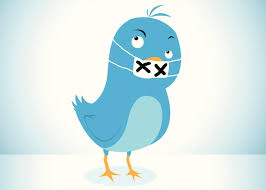
…I started thinking about it again after reading some twitter responses to Trump being removed from social media. Exactly the same stuff that first brought this idea to my mind years ago when Katie Hopkins [Katie Hopkins is an outspoken self-styled iconoclastic rightwing social media sophist] was booted off Twitter. Lots of the responses refer to an erosion of freedom of speech in form. Now, my monologue is not about the merits of the decision, nor does it concern the nature of the speech that might be losing its freedom. What strikes me is the perception large proportions of people appear to have developed. As Twitter et al are all private companies, they can essentially promote and ban whomever they like based upon whatever criteria they deem reasonable. It’s up to them. Much like a store choosing to only stick certain books, or a radio station banning certain songs or artists. Social media platforms are not government provided or a universal right to access. There are lots of them about and I’m certain many wouldn’t ban Trump or Hopkins at all. What I find most interesting is that the ubiquitous nature of the big social media companies has eroded and blurred the lines. People seem unable to identify them as “just an app I use” but rather see them as “the world” and, hence, someone’s removal from a particular platform as an attack on overarching liberty itself. Essentially, more and more people seem to view social media platforms as society itself. Which is curious but also a little sinister and unnerving.
Nick has raised some interesting and other debatable topics in his question – from the nature of free speech itself to the pervasive role social media has in most of our lives. But let’s keep the brief narrow to his core complaint. His issue is social media platforms and how, by interfacing with these programs for over a decade, our perception of their nature and their purpose has become entailed with the nature and purpose of free speech itself.
Why is this a problem?
Because ultimately, they are not the same thing either by nature or purpose and viewing them as identical leads to the misconception that one depends on the other. In this month post I will try to give a philosophical account as to why this perception may be the case and why it is flawed.
To begin with, what do we mean by a thing’s ‘nature’ and a things ‘purpose’ because I’ve introduced this concept about ‘nature’ and ‘purpose’ near the beginning of the post and a good place to start is defining those terms philosophically. To do this, I’m going to ‘riff’ off Aristotle somewhat and suggest that when we talk about a thing’s ‘nature’ we are talking about its ‘essential properties’.
Essential Properties are the things an object (concrete or abstract) absolutely needs to possess to be rightly and truly identified as the thing it claims to be.
With me so far?
Let me give you an example. When we think about a ‘table’ philosophically we would say that its essential properties could be:
Being made of a hard material substance such as wood, plastic, or marble. A table made of warm jelly, whilst potentially hilarious…would struggle to retain its identity.
Having ‘legs’
Having a ‘top’
And that to be a good table (which would be its ‘purpose’ – more on this in a minute) it must be able to permit dining, or a game of cards, or a whole bunch of laptops when everyone is working at home. A good table fulfills its purpose by being the best table it can be and retains its nature by losing none of its essential properties. If a table becomes broken or somehow deficient, we can still call it a table – but it will have lost its purpose (the poor thing).
We could go on with the list of essential properties and there may be some debate over what should be included and to what detail. But if I were to stand in front of my dining room table and begin to remove or change some its ‘essential properties’ (like removing one leg at a time) it would very quickly cease to be a table and instead be the ‘parts of a table’ and I would have a degree of explaining to do to my perplexed family.

Next, let’s flesh out that ‘purpose’ a little more. We are going to stay with Aristotle who says that everything has a purpose and that a purpose is to always achieve some kind of ‘good’ (I type the word good with speech marks because it doesn’t just mean the opposite of bad; in a philosophical context – ‘good’ can also mean flourishing, thriving and growing). If you’re a person or a moral being your purpose is to be morally good (living a good life). If you’re an object: a knife, table or chair for example, then you’re being the very best knife (always sharp), table (always sturdy) or chair (always upright) you can be. This can sound a little far-fetched, but hopefully you get the point. I also hope any objects reading this post will feel suitably inspired.
Twitter, of its nature, is a company which provides a service, but it also requires adherence to policies and rules of engagement. Furthermore, as a business, its necessary purpose is to make profit through the sale of its services. Just to sidetrack on slightly uneven footing for a second: as an abstract entity, Twitter is essentially amoral meaning it is neither good or bad and therefore under no obligation to be ‘morally good’. The folks who run Twitter are moral – and the persons who made laws that govern the business are moral and the shareholders and consumers are also moral and may demand the business act in certain ways– but Twitter as an abstract concept is amoral – because it’s not a person. Maybe that’s why it’s so easy to project differing values onto it…just a thought.
Clearly what’s best for a business is to make a profit. That is its ‘good’. If it does not make a profit, it is not a ‘good’ business (not thriving, flourishing, growing) and therefore does not fulfill its purpose. Likewise, if the purpose of the service it provides (to make money which sustains its nature) can be identified as connecting societies, and not just micro-societies (interest groups for example) but horizontally across global groups and vertically throughout every echelon of class and socio-demographic then that can certainly give it the look of being identical to society which is possibly why it has become so entwined with the right to ‘speak freely’.
Freedom of Speech
In Western democratic societies the nature of free speech is such that it is one of those inalienable rights which means, it cannot be taken or given away. Inalienable rights (happiness could be one, health another) are gifted to every person at birth. Some thinkers (such as John Locke) were of the view that ‘freedom’ itself was not a right bestowed upon a citizen by law, rather it is a ‘natural right’ that necessarily required laws to make it more concrete. For him, it was the egg that came first.
There is an also an argument that within democratic societies, the purpose of free speech is essential, maybe even necessary to such a society. In other words: it cannot be truly healthy or ‘good’ if its free citizens cannot speak freely with each other or are in some way restricted or silenced. Let’s also make the valid point that the problem of curtailing free speech only comes when governments do it, not necessarily private companies.
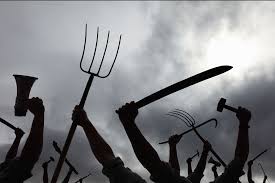
Now we begin to put the two together and see if we can blend the seams. To be active in the Twitter-sphere, whilst we do not speak per se, we do express our thoughts and opinions as is one’s inalienable right. With the borderless reach of Twitter adorning it the cape and cowl of society along with the secondary purpose of Twitter being somehow the same as one of the essential properties of a good society (speaking freely) then if some folks were denied access to freely speak via such a platform – they are arguably denied their inalienable right to free speech, its purpose to promote to a healthy and flourishing society. So now we can see the potential to view the two as identical. Put another way: I have an inalienable right to speak freely – I can speak freely through Twitter – Twitter has suspended me – my right is inalienable (you can’t take it away from me) – therefore, pitchforks at dusk.
However, the problem at hand is this: Twitter is not ‘society’. It is engaged in by ‘societies’ as a form of expression of speech but this does not mean it shares the same nature as ‘free speech’ (they have very different essential properties) and neither does it have the same purpose (the purpose of Free Speech is not to create profit).
Believing then that Twitter and Free Speech are identical to each other in so far as they are the same thing is a contradiction as they are each clearly different in both nature and purpose and that is why those who decry being suspended from such a service see their rights as impinged.
Contradictions always cause consternation:
How can it be possible that she runs a dog sanctuary and is cruel to cats?
How is it that he comes to work every day and yet gets nothing done?
That’s because running an animal sanctuary is not necessarily the same as being kind to animals (see Tiger King). Also, coming to work every day is not the same as being productive (ahem, though I can’t think of any examples). Therefore, whilst Twitter looks like free speech and leaps tall buildings in a single bound like free speech this does not mean it is free speech. Whilst having access to a social media account is a convenient and entertaining way to express our thoughts and opinions – it bears no resemblance to centuries old, carefully considered, legally defined and desperately cherished right such as ‘free speech’. One of the essential properties of free speech is that it is something you are born with a right to possess; unlike the services of an amoral profit-driven entity.
In conclusion (finally)
As I hope to have laid out in my argument; once we dismantle and analyze the different parts of something: its nature and purpose – we can quickly ascertain the differences in that nature and purpose giving us a much cleaner sense of what similarities or identities may exist. I would suggest Nick that the kind of folks who don’t engage in this mode of thinking are either not of a cast of mind to do so, or else they are deliberately speaking at a frequency not audible to every listener.
Post-Script (Optional)
I decided to keep the debate on free speech within Western democratic countries. Clearly, not every society views free speech as the ‘west’ does. Secondly, I focused on Twitter alone because it took centre stage in current affairs and just to keep the flow of the prose though please assume a tacit inclusion of Instagram, Facebook, Ello et al. Thirdly, the debate around the purpose of free speech which I set up as being necessary for a healthy society is arguably thin and possibly weak, but this was done consciously to keep the word count down. I can dive deeper into the topic on another post in the future if people are keen to have the discussion. Finally, there are millions of folks who don’t engage with any social media who feel perfectly happy with their free speech and find no issue in this at all. However, even as I type, President Trump has had his social media platforms pulled out from underneath him and his acolytes are decrying the move as suppression of freedom of speech. Therefore, whilst some of you really don’t see the issue, there’s clearly enough that do which makes it viable for discussion.
 StoatAubergine
Leave a comment