Every so often, the past gives us a little nudge (or a clout). Sometimes it’s gentle…a transportive song (for me it was The Killers ‘All These Things That I Have Done), the smell of a new shower gel that was just like the one Body Shop used to make in the nineties or a Facebook memory that says, “On this day, fifteen years ago…” and shows you in a shirt you no longer own; a defined cheekbone…
Other times it’s more insistent: news from old friends, a job you almost took reappearing, or the uncanny feeling that your life has circled back to a familiar place, only this time the furniture has moved.
Our relationship with the past can be a complicated one. It’s not something we have so much as something we negotiate. Like any relationship, it can turn unhealthy if one side starts doing all the talking. There are times when nostalgia can become clingy – whispering that things were simpler, that you were better, happier, more certain. And there are other times when we treat the past like an estranged relative we’d rather not acknowledge: locked in a box marked “lessons learned,” kept safely out of sight.
Neither approach works for long. The past, inconveniently, refuses to stay where we put it.
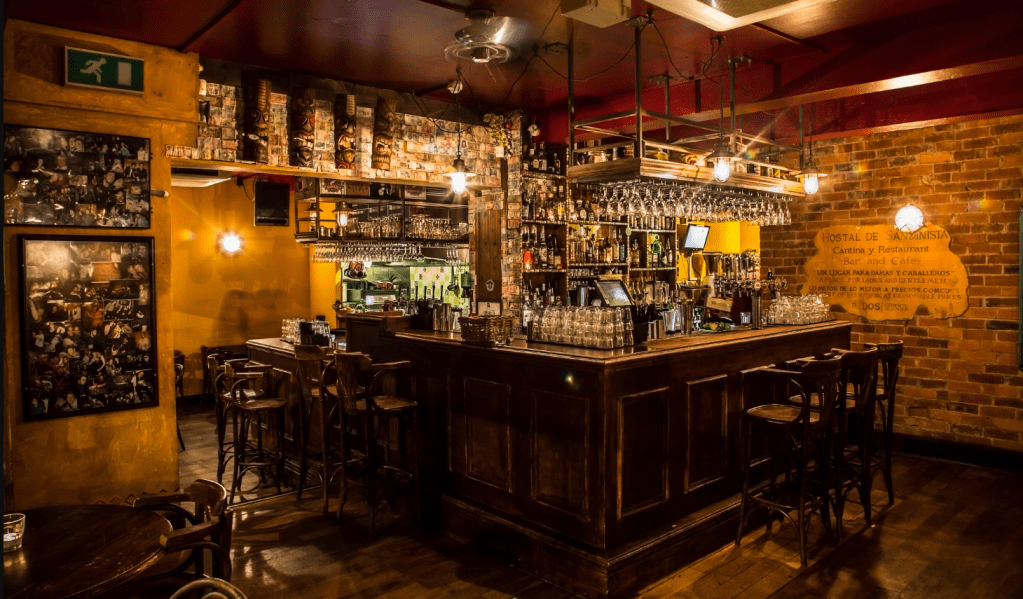
This week, I heard that one of my old haunts had closed, permanently. A small bar where I used to work and socialise over twenty years ago. Back then it was the best of times: cheap beer (if you knew where to stand), loud music, and the easy companionship of people who had no idea where life might take them. It was the kind of place where ideas seemed bigger after midnight, where someone always had a theory about politics or God (normally me) or the perfect sandwich, and everyone else nodded like converts. I thought of Orwell in Down and Out in Paris and London, describing those drunken nights when the broke and the brilliant crowded into smoke-filled rooms, “putting the world to rights” with the unearned confidence of youth. They were penniless philosophers, dreamers in aprons, declaring revolutions between refills. For a few hours, everyone was sure of everything. Then morning came, and certainty drained away with the dregs of the bottle.
That’s what I remember most about those bar years: the illusion of endless time, and how intoxicating that was. You didn’t realise that the people sitting beside you — full of opinions, laughter, and half-plans — were already dissolving into memory.

The truth is, the past has a way of colouring how we see the present.
If you leave it unchecked, it can start editing the story for you — turning every current challenge into a rerun of an old disappointment, or every opportunity into something that slipped through your fingers once before. But when you stay in conversation with it, not silencing it, not submitting to it: you start to see the past as a teacher, not a tyrant.
I once read somewhere, no idea where, but it was a philosopher reminding us that memory is not a library but a garden. You don’t just store things there; you cultivate, prune, replant. You decide what grows and what quietly composts into something useful. I’ve come to think that’s the healthiest way to manage our relationship with the past: treat it as something alive, something that needs tending.
When I look back at my own past — the countries, the schools, the people — I can see how each version of myself still lives somewhere inside me, occasionally shouting advice I didn’t ask for. The younger one says, “Be bold, take the risk.” The tired one says, “Be sensible, you’ve learned this lesson before.” And the present self stands in the middle, trying to referee the debate.
Maybe that’s the work of adulthood: learning to let the past speak without letting it drive. To take its wisdom without accepting its fear. To love who we were without wanting to move back in with them.
On a cellular level, we are literally not the same person we were back then. What gives us our identity, even our personage, are our memories. The philosopher John Locke argued that personal identity is founded on consciousness, not on the substance of the soul or body. What makes a person the same person over time, he said, is the memory of past experiences.
So, we’re stuck with it. Our past is the necessary scaffolding of our identity, the backstory of every decision. But like any relationship, it needs boundaries. We can listen, but we don’t have to obey. We can remember, but we don’t have to recreate.
The past, at its best, is a mentor who steps aside once the student can stand alone.
At its worst, it’s a ghost who keeps rearranging the furniture.
The trick, I think, is to keep it close enough to converse with, but far enough to keep perspective. To let it remind you where you came from but not dictate where you go next. And to plan for the future – to see opportunities not turned pale by thought of past failures, but instead grasped by the ‘new’ you.

 StoatAubergine
Leave a comment