

There was an international break in March. For those unaware, the ‘international break’ is normally a couple of weeks where football (soccer, but I’ll be calling it football today) that is played in England’s top tier (the Premier League) pauses so that players can play for their own countries in international friendlies or cup qualifiers. It’s also a break for fans like me whose team, like a toothache which leaves them in perpetual discomfort and concern with brief moments of relief, are not at their best.
I support Everton FC.
Don’t worry. I’m not about to angrily disgorge a thousand words about the state of Everton FC on my blog. In fairness, things are looking up: new stadium is looking fabulous, the financial fair play rule issues that have dogged us for so long seem to be resolving themselves and finally, it looks like we are signing players in the right positions, I mean, how many times have we been obstreperously banging on about full backs who can…wait…wait…Dillon…happy place…you promised – remember?
I did. Actually, this blog will combine Everton, football in general, the Doctrine of Divine Simplicity from Thomas Aquinas and the philosophical concept of ‘mereology’. These all sound like rather strange bedfellows, so I’ll explain as succinctly as I can how they came together in my brain and what I mean when I make the statement: I love Everton more than football.
It’s Spring Break, I’ve had a little more thinking time.
It all began because it’s the international break (as mentioned earlier) and I was recalling a conversation I’d had with a work colleague, in a bar in Tashkent, when we were chatting about the England international team. It was just before the European championships and he was asking me about my thoughts on such and such player and potential systems England could play as well as my view on other players from other European countries and honestly, I couldn’t really engage too deeply on this because I don’t really care about the England football team, I love Everton.
I am, what is classically referred to as a ‘club over country’ man.
Well, the discourse remained buoyant and frothy dark beer kept coming and I was probably very erudite and sophisticated and at one point during a feisty encounter, while the table received multiple index finger jabs, my friend said: ‘I think you love Everton more than football’.
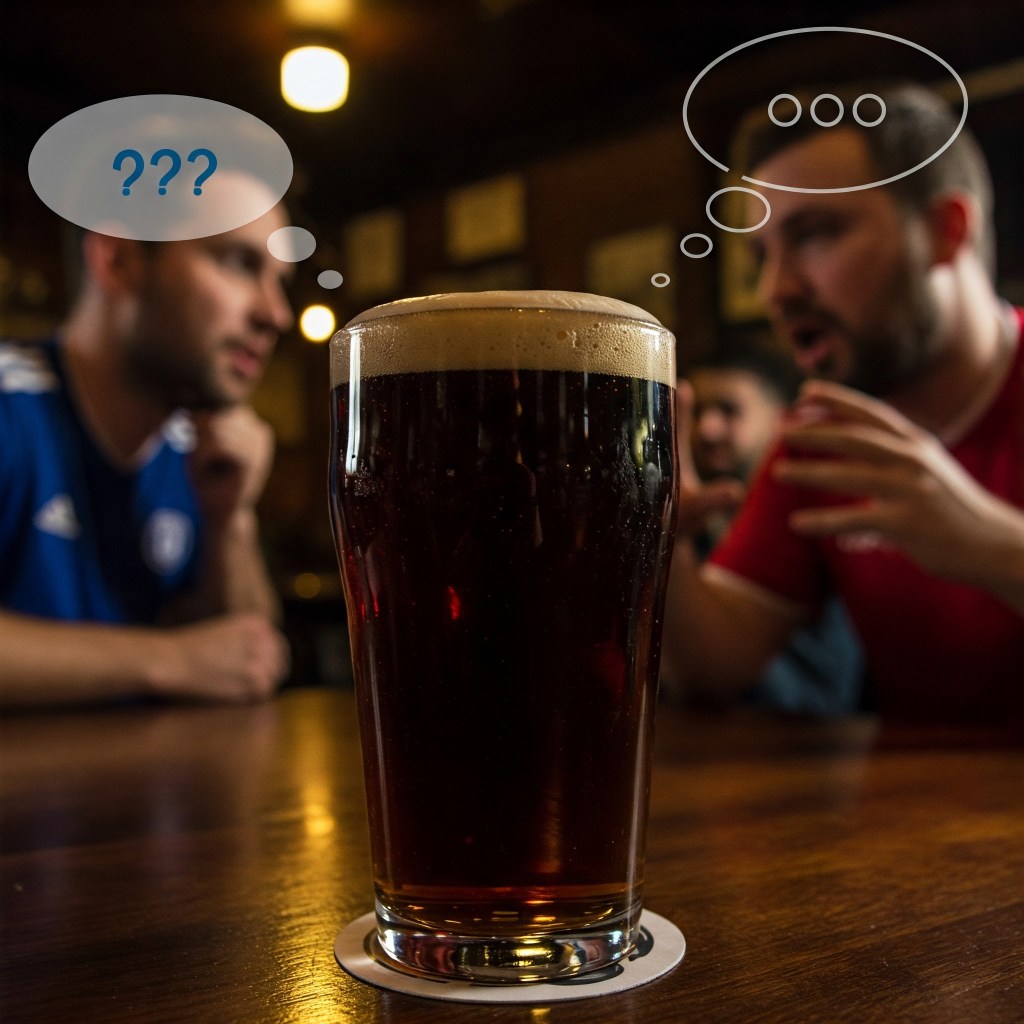
Let me tell you something about frothy dark beer. Frothy dark beer drank too excess does not mix well with coherent, rational philosophical thought. Therefore, I agreed with him about the Everton thing and popped that comment into my long-term memory. I say ‘popped’, I probably fell over a couple of times through the frontal lobe on the way, leaned on a brick wall around the limbic lobe, threw up all over hypothalamus (which will stain, no doubt) before eventually arriving at the hippocampus wearing inexplicably only one shoe.
However, it got there and stuck around and was unexpectedly recalled after I’d engaged this week in another favoured past time, reading about the concepts of God. My preferred concept of God (because like ice cream, we all like different flavours) is a ‘Simple God’. Now, I want you to read my blog and enjoy my musings, so I am going to explain this as succinctly as possible. Before I do, let’s be clear, I am no theologian and certainly not an academic. I read this stuff because it’s excellent mental exercise and very interesting.
If you want to take a deep dive then here is where I read this stuff online: Divine Simplicity (Stanford Encyclopedia of Philosophy)

A simple God is popular with several medieval philosophers, but I’m taking directly from Thomas Aquinas. Aquinas was a fascinating chap and wrote extensively and exhaustively about God including his most famous work Summa Theologiae but ended giving it all up after an epiphany because, and he states: “All that I have written appears to be as so much straw after the things that have been revealed to me.”
I thought ‘epiphanies’ were meant to be good things, so there you go. Anyway, they made him a saint so I’m sure he’s not complaining.
Parked within his hefty tomes is the Doctrine of Divine Simplicity (DDS) which states that God is completely without parts or divisions—He is not made up of separate qualities or components like created things – He simply, is. Unlike humans, who have distinct attributes (e.g., we have wisdom, power, and goodness as separate qualities), in God, His wisdom, power, and goodness are all identical with His very being. He does not “have” existence; He is existence itself. This means God is unchangeable, eternal, and perfect, because any change or division would imply imperfection. I don’t know about you, but I need an example to help me with knotty concepts so an example of this is light. We know that a pure beam of white light may appear simple, but when passed through a prism, it reveals different colours. God, however, is not like the divided light; He remains fully unified, with no separation between His attributes. It’s a hugely problematic position to hold and has come under fire a great many times over the last 800 years or so, however, I really enjoy the argument’s structure its overall ontological deliberations and (unlike God’s necessity) I have a good grasp of it.
Reading through DDS during the international break dislodged the ‘You love Everton more than football’ comment from my hippocampus (never found the shoe) and given that I am on Spring Break (did I mention that I have a little more time) it occurred to me that I wonder if it makes sense to love the whole of a thing (Everton) more than an important part of it (football).
To give this a proper good going over, I am going to need another philosophical concept and one that I grasp even less than God’s necessity. It’s from the branch of philosophy related to formal logic and it’s the one that the mathematicians love and the one I’m most likely to swerve at parties. If you’ve ever tried your hand at the metaphysics of logic, then you have my respect – these guys are a league of their own. However, I try to be sociable and know I will always learn something, so I grab a handful of kettle chips (but no dark frothy beer…especially with the logicians) and try and get involved.

The branch of logic I require is called mereology:
Mereology is the philosophical study of part-whole relationships, exploring how entities are composed, how they interact, and what it means for something to be a part of something else. Mereology focuses on concrete objects, such as a wheel being part of a car or a brick being part of a house, as well as abstracta, like a melody being part of a symphony or a chapter being part of a novel.
A key topic in mereology is the push-pull between what’s termed constituent ontology and a non-constituent ontology. Ontology is the branch of metaphysics that studies the nature of being, existence, and reality and a constituent ontology examines whether objects are fundamentally composed of more basic constituents or if wholes exist independently (non-constituent ontology). For example, as shown above, constituent ontologies, define entities based on their decomposable parts (e.g., “a car consists of an engine, wheels, and a chassis”). A non-constituent ontology might instead classify a car based on its function (e.g., “a car is used for transportation and is related to roads and traffic laws”).
Arguments about the coherence of DDS have been played out between these two competing ontologies with a far greater detail, sophistication and application then what’s about to happen here! I’m in it for the mental workout.
On first blush, it makes perfect sense to say that the F.C. part of Everton FC is pretty intrinsic. I would certainly agree that Everton FC would not exist physically without a stadium, or ticket sales, or staff and players or a whole myriad of physical constituent parts. Everton is contingent upon its physical parts – like a car is contingent upon its physical parts. What’s interesting here is that stadiums, tickets and persons who play football are all concrete that is to say they all exist in our physical world or to put it how philosophers would frame it: they are temporally located and extend through space, like you, right now, reading this, in whatever place you’re at, whatever time you’re in.
However, ‘Everton’ and ‘Football’ are not physical; they are not concrete; they are in of themselves abstract. I can go to Goodison Park (at least till June!), buy scarves with the Everton crest. As well, I can point at 22 persons kicking a ball for ninety minutes in adherence to the rules of football – but I cannot touch ‘Everton’ or ‘Football’. They are both concepts – they are both abstract. So the concept of Everton FC could equally be realised as having the following parts: A community of persons, either in that area of Liverpool or anywhere in the world with a shared love of the values of Everton. Seen as parts, these values have (in my view) virtuous properties for example: charity work, community projects and team values such as togetherness, perseverance, loyalty and honour. The ‘Football Club’ (FC) part is a sporting pastime that could equally be any other sporting pastime related to the geographical location on ‘Everton’ or intrinsic value parts related to ‘Everton’. Therefore, the parts of Everton: community, history; geography; tradition; spirit are equal in relation to the part of ‘football’ (a sport that is played by a set of rules and outcomes) giving us Everton FC.
Everton’s function is as a club that plays football, but it also serves as a community focus, charitable exercise, embodiment of values that could be considered virtuous (teamwork, perseverance, fair play, community focused) a function that provides a continuous tradition that links these values (parts) across decades of history.
Furthermore, by applying a non-constituent ontology to the concept of Everton FC as a whole and by not placing any kind of hierarchal ‘part-whole’ structure onto ‘Everton’ and ‘Football Club’ I can talk of Everton FC’s parts as being relational or associative to its whole. Football Club is a part of Everton but only in relation to the club not as a constituent part (as Everton is also a geographical place with values). Everton is in equal relation to its other parts: community, spirit, charity etc. as it is to ‘football’
So, when I consider the parts of Everton FC as relational and I think about the part of ‘football’ as well as its other parts – there’s sense in saying that in relation, the parts of the club that are identified as ‘Everton’ as: honour; community; charity; perseverance; tradition are in of themselves more virtuous than ‘football’ and are more deserving of my love than a game of football.
So, I can love Everton more than football.
That said, if they sign a good ‘right back’ next season along with a couple of wingers who could provide decent service to a number nine…I could easily be swayed.

 StoatAubergine