Category: Parenting and Childhood

  • Fathers? Absent. Teachers? Present.

    Fathers? Absent. Teachers? Present.

    The problem with holidays is one has time to scheme. The day-to-day pressures of working and upholding a work persona mean that when one’s time is one’s own and the inbox is ignored and the work persona shelved: new, interesting, ambitious and creative projects come to the fore. Currently, the ambitious and creative project hamster which spins the wheel in the back of my head and occasionally and loudly nibbles on toilet roll is what I would do for a PhD. More often than not, the rustlings and nibbling’s of project hamster are drowned out by the bellows of students and vicissitudes of everyday life. Like I say, that’s the problem with holidays.

    Men are a problem. I would confidently claim that in a substantial amount of a child protection social worker’s case load the bulk of the load is caused by a man: a man who is absent causes problems; a man who is present causes problems. They’re just problematical. Problematic men in a child’s life within a child protection context would be fairly obvious – risk of abuse. However, their absence from a child’s life can place significant strain on the normative parenting workload of a single parent. Furthermore, the lack of a good role model can also be detrimental to a child’s sense of identity and esteem. However, not all male parenting figure’s absences are linked to child protection. Oftentimes, the nature of a significant male role model’s absence in a child’s life is simply due to expectations and pressures of work, and within the context of international schools – the earning divide. This is especially felt in countries where the wife (though not exclusively) or ‘accompanying spouse’ can’t get a work visa which places the ‘breadwinner’ burden firmly on the male side. The reality for a lot of hard-working and loving fathers is that their ‘problematic’ absence is not due to maleficence, but simply work commitment. Another significant variable, especially for expat families, is the lack of a family support network. All put simply, in my experience in international schools, dads are away a lot. I know this because the children tell me. And they tell me that whilst they understand why their dads are away…they miss them.

    Parenting can be problematic. And in child protection social work it can become unsafe and concerning. When child protection social workers are faced with overwhelming evidence that a child is at risk of significant harm, they can use legal powers or ‘Care Orders’ to remove that child from the home (often temporarily, sometimes permanently). During that period of separation and before any final court orders around adoption happen, the biological parents retain their legal status of ‘parent’ and all the responsibilities therein, however the local authority is given a new epithet: Corporate Parent. Now, I like the phrase ‘corporate parent’. That said, I understand the grind between something as innately caring and purposeful as ‘parent’ and something as myopic, calculative and materialistic as ‘corporate’. However, parenting can be a hot boiling mix of values, ethics and psychology that could benefit from the cubed iced drops of policy, procedure and measurable outcomes. What I liked most about the phrase ‘corporate parent’ during my time as a social worker is it separated me from the role. When I was working with a child, I could exhibit the unconditional regard for safety and the intuitive show of compassion and care linked inextricably with good parenting but had that corporate parent embossed tempered glass panel between us that allowed me to make rationale and evidenced based decisions for what was best – unfettered by any ‘loving obligation’.

    Well, that was theory. In practice it was incredibly hard – especially when the ‘Body Corporate Parent’ (senior leadership) insisted on decisions that either made no sense or clearly didn’t know the child. However, I digress.
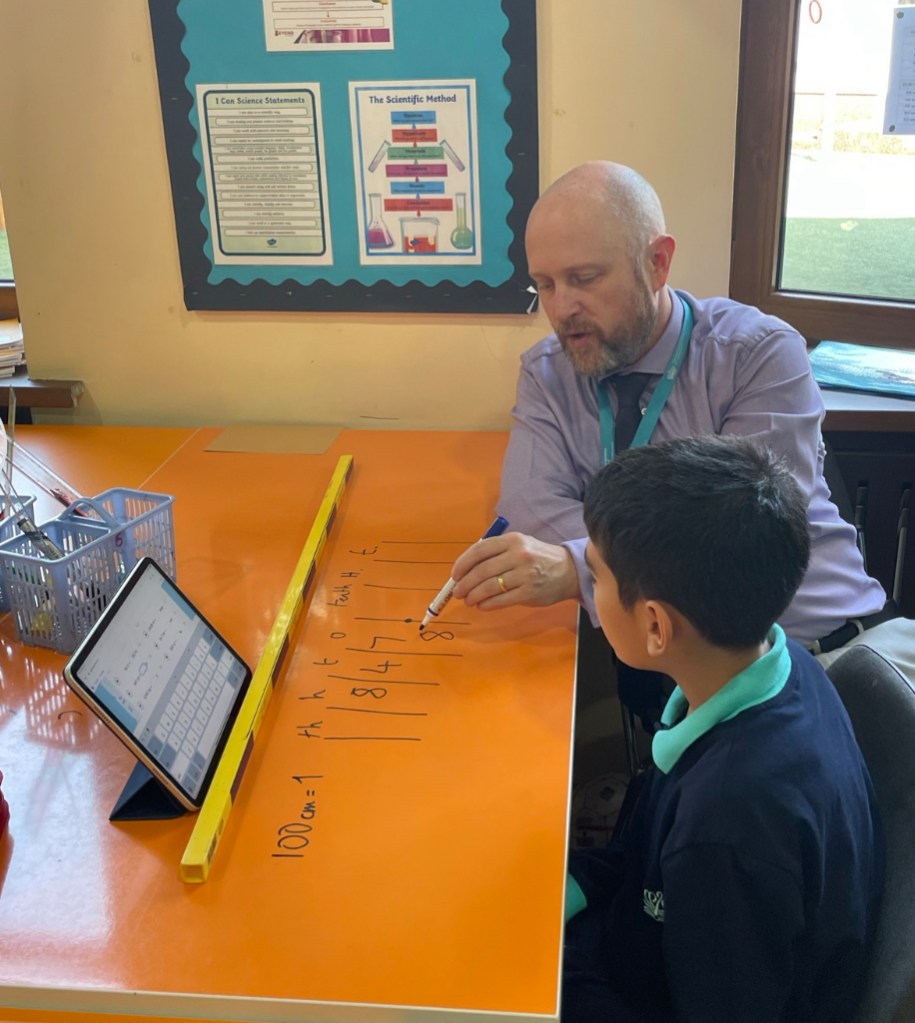
    Can I say, the hamster in my head is feeling the love right now? I am metaphorically cleaning out the cage, refilling the water and putting a few treats in the bowl here. To be honest, it was beginning to smell a little bit.

    The PhD idea? I am essentially talking about non-dangerous absent fathers and the role of the corporate parent – in this case ‘teacher’ and more specifically: ‘male primary school teacher’. Where am I going with this within an international school context and what does this have to do with a PhD? It would be my view that male primary school teachers have a corporate parenting role to play in their student’s lives within certain specific contexts. I would almost go as far as an ‘obligation’ to do so (if I was feeling more controversial) And whilst there are professional, ethical, and sociological issues with this claim (and that I would be made to refute) ultimately, teachers do share the parenting load; they do have a legal duty of care anyways and, because of the problem of men – male teachers should be prepared to pick up the extra heavy lifting in certain contexts as a corporate parent.

    Cage is clean, hamster is happy. I’ve made a lot of claims here about fathers and family demographics in an international school setting – but I reckon with a good academic library, and some of my own qualitative research, I could substantively prove this to be the case. I’ll be arguing some pretty interesting points from education philosophy, sociology and ethics but again, I would probably enjoy that! But, what do you think? I would welcome the views of any readers of this piece on the statement:

    Male Primary School teachers have a corporate parenting role to play within the lives of children with absent fathers.

  • Pinky Cat: And her adventures through Food Avoidance.

    It happened at some point on the London Underground, Piccadilly Line, possibly as the train moved through Hounslow. It was the very final journey of our two-week visit to family and friends. The five of us had been burdened with 4 suitcases and numerous shoulder-slung, hand-held luggage as we moved between locations in both Essex and Yorkshire. We also carried another burden during our stay. The youngest member of our cohort had stopped eating solid food. In fact, she’d eaten her last morsel on June 17th. An elderly gentleman of possible South Asian descent remained expressionless on the morning of August 1st, as, sat across from us on the train, he witnessed an animated tableau of praise, clapping and whooping and the overwhelming relief felt by all. Maybe he never had children, and this was baffling; maybe this wasn’t the first time he’d seen a two-year-old eat a ginger biscuit. It was the first time in nearly two months I’d seen her chew. I nonchalantly watched her move the damp, heavily licked biscuit into her mouth – I held my breath, smile widening, trying to catch my wife’s eye. I witnessed our daughter bite the head off her biscuit (she is merciful like that) and chew. In that delicious second (for us all), we knew the seven weeks of patience, controlled emotions and bright, positive communication had actually worked.

    So, what was the cause, what was the diagnosis, what was the treatment and what, in a very Sesame Street way, did we all learn?

    First of all, some context. Aubrey was born with allergies. We didn’t learn of them until she was just under two months old. In October 2020, whilst we were living in Qatar, my wife had to return to work seven weeks after giving birth. She was obviously not thrilled with being parted so early from our daughter but, as they say in Texas, this wasn’t our first Rodeo, and so we viewed the early adaptation with stoical resignation. Fortunately, there was a marvelous nursery on the compound. To facilitate the move, we switched to mixed feeding and duly one morning, whilst my wife was getting ready for work, I gave Aubrey her first bottle of formula. Five minutes later our daughter had swelled. Her lips, yellow puckered and blistered; breathing raspy and difficult to catch. That awful aluminum taste in your mouth when you realize something unknown has wrestled the control of your child’s wellbeing from your own hands and placed it into a future unknown and terrifying. Our eldest son, who was thirteen, sprang into action, comforting our nine-year-old and maintaining a focus and calmness that fills me with admiration to this day. The ambulance was called, EpiPen administered, and after a year of tests she was proclaimed allergic to all dairy products and nuts. Aside from this, she is an all-round healthy little girl.

    With that in mind, we reckon the cause of her reversal from mastication stemmed from a soft ‘Haribo’ type jelly. We live in Uzbekistan, in its capital Tashkent. Here all product ingredients are presented in either Russian or Uzbek. We’ve become adept at checking ingredients via Google Translate, but small candy packaging can have font which requires less a phone and more a magnifying glass. She had a favourite brand of sweets with a white foam base and on that day, the day the eating ebbed away, I picked the same style of foam treat but a different brand. This brand had yoghurt in the foam base. I didn’t check the tiny writing and our daughter’s reaction, whilst not serious, was immediate and very uncomfortable for her. As the weeks went on, she requested smaller portions of rice, pasta and vegetables; pushed away from treats such as crisps and chocolate and on one evening rejected her rice milk. By the time term ended on June 23rd she would only ‘eat’ very smooth soup and the reason I have hyphenated ‘eat’ is because she wasn’t eating – she was only licking. Like a cat. In fact, over the period of her food avoidance she developed an alter-ego for herself…Pinky Cat. Pinky Cat liked to give food ‘kitty licks’ (patience-testing tiny whips of her tongue) and ‘kitty nibbles’ (fortitude- taxing introductions of food stuff to her teeth which she then mimed ‘nibbling’ and inevitably pushed away). All in all, ‘Pinky Cat’ was not popular but, as we learned at the end, wholly necessary.

    At least we knew the cause. The diagnosis? Well, here in Tashkent access to English speaking specialists like pediatrically trained dieticians is sparse. So, we turned to Dr Google and sure enough we were able to correlate her behaviour with the phrase ‘food aversion’. Clearly, her choking and coughing experience those weeks previous had had a profound effect on her frontal lobe and she decided that no more solid food would be invading her esophagus for the foreseeable and like an exclusive nightclub she put up the velvet rope to her pallet with an instruction which read ‘Sorry lads, if I have to chew you – you’re not coming in’

    The treatment? Well, this was simply the most challenging part: Patience. Now, we had a few things in our favour. First of all, we are both teachers and were on summer break. We had time on our hands to make a plan. Secondly, irrespective of her decision – she was absolutely fine. Her decision to accept only rice milk and slowly and deliberately lick up soup as ‘Pinky-Cat’  had no impact on her energy, demeanor, sleep or personality.

    This was our rational anchor.

    Between the weeks at home under the hot Uzbek sun and the classic fortnight of a changeable British summer, the four of us kept each other’s ‘cool’. We applauded any brave step towards sustenance more robust. We blended, we cajoled, we sieved, and we sneaked in different food experiences. What we learned was that she needed time to process her fear. We literally started from scratch – weaning her back to solid food. The silver lining was that she made a firm cognitive step. A new schema had developed (to borrow from Piaget). As we boarded the plane back to Tashkent, we were able to help her understand that some food had ‘cow’s milk’ and she couldn’t eat it, but most foods would do her no harm. In tandem with her own cognitive development, we re-constructed her understanding of her own diet. Now, our daughter is able to rationalise (as much as a three-year old can) what is good for her and what she needs to avoid.

    “No pizza daddy! Pizza has cow’s milk!”

    And yes, Pinky Cat still makes an appearance now and then. This time as an endearing way to catch a snuggle. And no, we don’t feed her from a saucer.