
When we say we ‘belong’ somewhere – we may be thinking in ‘concrete’ terms. This means that we can belong somewhere ‘legally’ through our passport or other documents which properly affiliate us with a place or person. For example, because I have a British passport I am British and therefore belong in Britain. Clearly, this sounds problematic – especially for persons who live a global life.
‘Belonging’ is a powerful and deeply felt sensation – but what does it mean to ‘belong’ somewhere?
This week, from our home in Doha, we sent off for our daughters first passport. She’s 10 weeks old at the time of writing and was born right here in Qatar at Al Wakra hospital. Therefore, she is currently without a nation. She cannot be Qatari by law (unlike if she were born in the USA for example – where she’d have dual citizenship) and until her British passport arrives then technically, she is simply a child of the planet. Ironically, she cannot be a child of the planet as that would disturb whichever border agent who, as they quizzically eye our smiling faces, sternly asks us again why she doesn’t have a passport and what do we mean ‘child of the planet’?
What our daughter doesn’t know which her older brothers do, is that she will be a true ‘Third Culture Kid’ (TCK). TCK’s are normally children of military or diplomatic families or families, like us, who have chosen to live and work in different countries and raise a family within different cultures. The term captures the experience of these children whereby they live with one culture at home (though not always) their ‘second culture’ which is usually the culture of the host country which leads them to creating their own ‘third culture’.
It always gives us such a thrill when we hear how our boys begin to assimilate, adapt and adopt the cultural nuances and norms of where we live. In Texas it was hearing our then three-year-old asking me ‘What ya’ll makin’ for dinner’ where the Texan drool of ‘y’all’ was interspersed with the dying embers of his Yorkshire twang. As I write this today my eldest is playing Fortnite online with his friends and every so often he will shout “I didn’t shoot you! Wallah! I didn’t shoot you!”. In Arabic ‘Wallah’ is one’s promise to God and it is an oft shouted demand or protestation of innocence from the Qatari children heard numerous times within my classroom! But hearing my son dropping this and several other Arabic words into his conversations reminds us what an incredible life he is leading right now.
This post is not exclusively about Third Culture Kids – though if this theme speaks to you then I highly recommend David.C.Pollock and Ruth E.Van Reken’s book “Third Culture Kids”.
The experience of expatriate families, though full of opportunity and undeniably some privilege, comes at a cost – and that can be a sense of belonging. By living lives that are highly mobile, multi-lingual and cross cultured there are no roots put down. Arguably, in the 21st century and certainly through Covid-related necessity – technology and video calls do well to ameliorate the disconnect across thousands of miles between loved ones in ‘home cultures’ but I sometimes wonder where my children will say they ‘belong’? So, when we say we ‘belong’ somewhere, what do we mean?
For Merriem Webster ‘belong’ is to be:
“attached or bound by birth, allegiance, or dependency; to be properly classified; to be in a proper situation; to be the property of a person or thing”
Merriam Webster
For me, I can say I have a sense of belonging to my home country of England (lived experiences) and a concrete sense of belonging (British Passport). It is the country of my birth and home for the first three decades of my life. I can also unequivocally say that I belong to my wife. Along with our marriage certificate, our shared experiences, shared stuff and shared parenting certainly confer a concrete sense of belonging both in the possessive sense ‘I belong to her’ and the abstract ‘sense of belonging’. But for our daughter – ‘belonging’ within the definition of: ‘attached to allegiance to birth country’ does not strictly apply. She will have a concrete sense of belonging to us (legal duty) to the UK (legally) and feel a sense of belonging to all of us as a family but where, as an adult TCK, will she feel she belongs geographically?
We can belong to groups (families, communities) and places (birth places, places we live) and people (our children belong to us – legally in the same sense spouses can belong to each other) so is it enough for our little girl that she gets to belong to a community and persons but that she may miss out on the wide, thick root of ‘sense of belonging’ in terms of a connection to a country that not only bore you – but the generations before you? Our children don’t have the past ‘present’ in their lives. Thinking culturally – catchphrases of any given golden age of television are not heard by them. I sat down and watched ‘Blackadder Goes Forth’ with my two boys and they really enjoyed it – but it occurred to me then, as it does now, that because we are not physically in England these societal cultural narratives and norms are not omnipresent in their lives. For them, they are British by birth and passport and so can live their lives with that legal ‘concrete belonging’ (as will our daughter) but that ‘sense of belonging’ are those deep fibrous connections that define us, give us our identity through shared family experiences and daily life within our born culture which are dense and provide greater ‘kinship’ that a document simply stating a nationality. For our daughter her passport will confer British nationality – but her place of birth will forever be Al Wakra.
I do believe that for our two sons, an abrupt return to a UK school during these formative schooling years will not be such a shock. They were both born in the UK and whilst our middle son left when he was two years old – he does have some memory of his time there. For our daughter, it is her constructed ‘third reality’ built around us as a family unit – an international school setting and a host country culture fully experienced which gives her that sense of belonging. Should she find herself in a small village school somewhere in West Yorkshire that process of deconstruction could be difficult for her– particularly if it comes during those upper Primary early Secondary years.
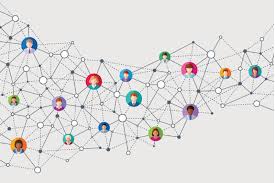
I would argue then that thinking about concrete belonging in a legal sense is not the be all and end all. Belonging doesn’t come with such narrowly strict parameters and isn’t monolithic in nature (I belong here and here only). Instead it is like a matrix of neural pathways in a growing brain. As familiarity and affiliation grows with a connection to a place or persons – so that connection strengthens; its once thin fibrous tendrils become like strong branches. Also, conversely, as we drift away from places and persons what once felt like a solid link loosens and itself becomes weaker and less substantial. Surely, this is the nature of our lives – especially in the 21st century. To be committed to one place and one community may provide a dense and almost concrete sense of belonging – but change is inevitable and to think of belonging in such a narrow view (a time, a place, a document) could bring ambiguity and distress when change or upheaval inevitably occurs.
In Conclusion…
I will close by also suggesting that there is something melancholic to ‘belonging’. It contains that word ‘longing’ which suggests a desire for something just out of our reach, over the horizon. Maybe the issue with searching for or reflecting too deeply on ‘belonging’ is that it is illusory in the sense that such a firm concrete feeling of belonging is not something any of us could ever have, despite documents to the contrary; people divorce, change citizenships, alter names…there is too much change for such a thing to be real. But by promoting a ‘sense of belonging’ as something that is fluid which doesn’t commit us to an unchanging ‘state of affairs’ and doesn’t have to be about an attachment to a single thing – we can ourselves construct healthy affiliations to persons, places and things which promote our own growth and senses of belonging without committing to ideologies or ways of being and thinking. For our own children, their experience of belonging may will be with people over places and who knows, maybe our daughter will return to the Middle East one day – to somewhere she truly belongs.
 StoatAubergine