Tag: education

  • Teaching, Profit, and the Stories We Tell to Stay Comfortable.

    Teaching, Profit, and the Stories We Tell to Stay Comfortable.

    There is an old saying that people do not like seeing laws or sausages being made.

    For teachers, the same could be said of wealth generation.

    Teaching is imbued with a public sector ideology. It is labour that transcends renumeration; work that’s a calling, not a demand. The children, after all, are our future. But can teachers in the private sector be squeamish about supporting, even actively increasing their school’s wealth creation? Is there a friction between whether teaching is caught between public sector virtue and private sector profit propagation?

    When I was a social worker, a not insignificant part of the job satisfaction came from being paid by the taxpayer. I was answerable to the community I served. This is a narrow view of course, but it was the uranium rod of truth that powered my ethics and beliefs.

    And like social work, teaching is often imagined as sitting above ordinary economic logic. It is framed as a public good, a moral practice, a form of labour whose value exceeds its price. Teachers do not do it “for the money”. Education, we are told, is not a commodity. These ideas are repeated so often that they begin to feel like truths rather than choices.

    And they are powerful truths. A good teacher rarely leaves your memory, and their instruction quietly shapes the futures of young people across the world – and can you really put a price on that?

    Take that same ideology, however, and deliberately structure it for wealth creation—for private equity firms, individuals, or publicly listed companies—and it is hardly surprising that some teachers begin to feel a strain.

    This should be caveated. Many of these same teachers have chosen to take their skills into a labour market—often overseas—that offers higher remuneration than state school wages and, in some cases, a better quality of life. To paraphrase my favourite line from the 1994 Kevin Smith movie ‘Clerks’, when a character is challenged about the innocent lives lost when the Death Star is destroyed:

    “They knew what they were getting into. They knew who they were working for.”

    Still, I don’t want to be disingenuous to private schools. This isn’t a class rant, certainly not from someone who is happily employed at one.

    Teaching carries a powerful moral inheritance. It is one of the few professions still routinely described in vocational terms: service, care, dedication, sacrifice. That inheritance matters. It protects teaching from being reduced to a transaction and teachers from being treated as interchangeable service workers.

    But moral inheritance also carries constraints. It shapes what can be said out loud.

    In particular, it creates discomfort around money. To speak too openly about efficiency, cost, productivity or return on investment risks sounding crude, even unethical. The language of markets is tolerated at the edges of educational discourse, but rarely allowed into its moral centre.

    This makes a certain sense in the public sector, where education is explicitly funded as a collective good. It becomes more complicated when teaching takes, even actively takes place inside private institutions.

    Private schools are not naïve about economics. They must recruit, retain, invest, compete and plan for long-term sustainability. Fees do not simply maintain buildings; they fund futures. Yet even in fee-paying contexts, there is often a reluctance to name the relationship between teaching and wealth generation directly.

    Instead, financial realities are softened through moral language. Schools speak of reinvestment, of quality, of excellence, of outcomes for children. Profit, if it exists at all, is described as incidental or virtuous—something that happens almost by accident on the way to doing good.

    Teachers are rarely told explicitly that their labour generates institutional value; that reputation converts into enrolment; that enrolment underwrites salaries and expansion. Everyone understands this. It is simply not spoken plainly.

    The result is a curious duality. Schools operate in markets, while teachers are encouraged to think of themselves as existing above them.

    The tension here is not simply between public and private sectors. It lies deeper, in the collision of two incompatible logics that teaching is increasingly asked to inhabit simultaneously.

    One logic treats education as a moral and civic practice. Its value is long-term, diffuse and social. Its outcomes may not be immediately visible, and their worth cannot be easily quantified. The other treats education as a service purchased by families. Its value must be demonstrable, comparable and timely. Outcomes must justify cost. Teachers are asked to hold the first logic as their professional identity while delivering the second as their professional output.

    This is not hypocrisy. It is structural contradiction.

    Most teachers are not opposed to schools being financially healthy. They want stability, good resources and fair pay. What unsettles them is not the existence of money, but the pretence that it is irrelevant. When teachers are asked to maintain public-sector moral identity while absorbing private-sector pressures, something gives. Often it is not performance, but trust. Cynicism creeps in. Branding language feels invasive. Metrics feel misaligned. Burnout is framed as personal failure rather than systemic tension. This is sometimes mistaken for ideological resistance to markets. More often, it is a response to being asked to live inside an unacknowledged contradiction.

    Education does generate economic value. Acknowledging this does not diminish its moral importance. What corrodes professional integrity is the refusal to hold both truths at once. Private education will remain ethically uneasy for as long as it relies on public-sector virtue while operating on market logic. Teachers deserve honesty about the systems they work within—not euphemism, not moral fog, and not polite silence.

    I spent three years working in the admissions and marking department of a private school and now teach within one. I have lived both sides of the contradiction. If private schools wish to claim moral seriousness, they must find transparent ways to articulate both the role of wealth creation and the responsibility of educating future citizens of a shared world.

  • Fathers? Absent. Teachers? Present.

    Fathers? Absent. Teachers? Present.

    The problem with holidays is one has time to scheme. The day-to-day pressures of working and upholding a work persona mean that when one’s time is one’s own and the inbox is ignored and the work persona shelved: new, interesting, ambitious and creative projects come to the fore. Currently, the ambitious and creative project hamster which spins the wheel in the back of my head and occasionally and loudly nibbles on toilet roll is what I would do for a PhD. More often than not, the rustlings and nibbling’s of project hamster are drowned out by the bellows of students and vicissitudes of everyday life. Like I say, that’s the problem with holidays.

    Men are a problem. I would confidently claim that in a substantial amount of a child protection social worker’s case load the bulk of the load is caused by a man: a man who is absent causes problems; a man who is present causes problems. They’re just problematical. Problematic men in a child’s life within a child protection context would be fairly obvious – risk of abuse. However, their absence from a child’s life can place significant strain on the normative parenting workload of a single parent. Furthermore, the lack of a good role model can also be detrimental to a child’s sense of identity and esteem. However, not all male parenting figure’s absences are linked to child protection. Oftentimes, the nature of a significant male role model’s absence in a child’s life is simply due to expectations and pressures of work, and within the context of international schools – the earning divide. This is especially felt in countries where the wife (though not exclusively) or ‘accompanying spouse’ can’t get a work visa which places the ‘breadwinner’ burden firmly on the male side. The reality for a lot of hard-working and loving fathers is that their ‘problematic’ absence is not due to maleficence, but simply work commitment. Another significant variable, especially for expat families, is the lack of a family support network. All put simply, in my experience in international schools, dads are away a lot. I know this because the children tell me. And they tell me that whilst they understand why their dads are away…they miss them.

    Parenting can be problematic. And in child protection social work it can become unsafe and concerning. When child protection social workers are faced with overwhelming evidence that a child is at risk of significant harm, they can use legal powers or ‘Care Orders’ to remove that child from the home (often temporarily, sometimes permanently). During that period of separation and before any final court orders around adoption happen, the biological parents retain their legal status of ‘parent’ and all the responsibilities therein, however the local authority is given a new epithet: Corporate Parent. Now, I like the phrase ‘corporate parent’. That said, I understand the grind between something as innately caring and purposeful as ‘parent’ and something as myopic, calculative and materialistic as ‘corporate’. However, parenting can be a hot boiling mix of values, ethics and psychology that could benefit from the cubed iced drops of policy, procedure and measurable outcomes. What I liked most about the phrase ‘corporate parent’ during my time as a social worker is it separated me from the role. When I was working with a child, I could exhibit the unconditional regard for safety and the intuitive show of compassion and care linked inextricably with good parenting but had that corporate parent embossed tempered glass panel between us that allowed me to make rationale and evidenced based decisions for what was best – unfettered by any ‘loving obligation’.

    Well, that was theory. In practice it was incredibly hard – especially when the ‘Body Corporate Parent’ (senior leadership) insisted on decisions that either made no sense or clearly didn’t know the child. However, I digress.

    Can I say, the hamster in my head is feeling the love right now? I am metaphorically cleaning out the cage, refilling the water and putting a few treats in the bowl here. To be honest, it was beginning to smell a little bit.

    The PhD idea? I am essentially talking about non-dangerous absent fathers and the role of the corporate parent – in this case ‘teacher’ and more specifically: ‘male primary school teacher’. Where am I going with this within an international school context and what does this have to do with a PhD? It would be my view that male primary school teachers have a corporate parenting role to play in their student’s lives within certain specific contexts. I would almost go as far as an ‘obligation’ to do so (if I was feeling more controversial) And whilst there are professional, ethical, and sociological issues with this claim (and that I would be made to refute) ultimately, teachers do share the parenting load; they do have a legal duty of care anyways and, because of the problem of men – male teachers should be prepared to pick up the extra heavy lifting in certain contexts as a corporate parent.

    Cage is clean, hamster is happy. I’ve made a lot of claims here about fathers and family demographics in an international school setting – but I reckon with a good academic library, and some of my own qualitative research, I could substantively prove this to be the case. I’ll be arguing some pretty interesting points from education philosophy, sociology and ethics but again, I would probably enjoy that! But, what do you think? I would welcome the views of any readers of this piece on the statement:

    Male Primary School teachers have a corporate parenting role to play within the lives of children with absent fathers.

  • Pupil or Student – Is there a more suitable noun for today’s child learners?

    In this month’s blog, I will argue against naming school-aged child learners as ‘pupils’. I will suggest that calling them ‘pupils’ is at best simply naming a child who goes to school and at worst it is idealistic and out of touch with modern pedagogy – promoting the outmoded product of a dependent taught child. I will then offer the argument that to promote the image of a school child who doesn’t simply attend school for instruction but as an active learner who is studious by nature – then only the term ‘student’ will suffice.

    My wife and I are both teachers. Now in her twelfth year, Mrs. Wolfe is significantly more experienced than I having taught in one Europe’s largest secondary schools in West Yorkshire followed by seven years teaching internationally in Asia and North America. We have worked in schools that have called child learners students and schools which call them pupils. My wife really hates the term ‘pupil’. In fact, this debate was her idea. I told her I would consider it philosophically and she could do the actual research. When she is typing reports, I can hear the extra punch saved only for the sequence P-U-P-I-L. But why is this a problem? Does it matter? And if it does matter – is there a reason why one term should be preferred over the other?

    A good place to start is with a definition:

    Pupil: a child or young person in school or in the charge of a tutor or instructor Originating from the 16thcentury Middle English pupille (minor ward), from Anglo-French, from Latin pupillus (male ward) from the diminutive of pupus (boy) and pupilla (female ward), from diminutive of pupa (girl). 

    Student: One who attends school; one who studies; an attentive or systematic observer. Originating in the 16thCentury Middle English, from Latin student-, studens, from present participle of studēre to study.

    Merriem webster – online dictionary

    We can see some similarities and some differences that will go straight to the heart of the matter and also explain why Mrs. Wolfe’s nervous tick is so pronounced during report writing season.

    In terms of etymology, both terms originate from some form of Latin (no surprises there) but each sketch a different picture about the nature of the child learner. If we were to simply rely on the definition of each term and its etymology – then ‘pupil’ is a child who is in ‘the charge of another’. Deriving from a word meaning ‘ward’, the term ‘pupil’ (like Batman’s sidekick) is a young person who is watched over by someone other than their parent. Therefore, the nature of a pupil is one who is dependent upon instruction. A student on the other hand is one who ‘studies’ and that verb study is intrinsic to its definition because it casts the mould of a learner  – with a degree of independence. A learner for whom studying and learning are within their nature. 

    With our terms defined and to some extent explained, why is calling a child learner a ‘pupil’ an issue? The problem lies in an apparent contradiction. Of the schools I have worked in and the current pedagogy as it is – our learning institutions should be promoting independent critical thinkers, not children who are simply in the instructional care of their teachers. Furthermore, to stick with pupil because it best categorizes school-aged children is to suggest that it is only when they leave school that independent thinking and study should start. It is clear to me that etymologically speaking and given the challenges of the twenty first century that we need more students – not pupils.

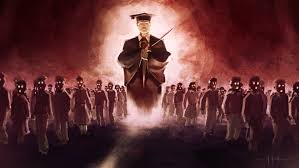
    Let’s speak intuitively before we get too analytical. When I think of a ‘pupil’ I think of blazers and straw hats; white socks pulled up above the knees and lichen on granite. Elsewhere in my mind are wood paneled classrooms, desks in a row (socially distanced, of course), ink wells, stern mustached school masters their faces contorted in a snarl; children trudging into a meat grinder…giant hammers marching past…hang on…that’s the video to Pink Floyd’s ‘Another Brick in The Wall’. However, that’s what pupil connotes. Its essence is ‘old-fashioned’, a term for a simpler time. The appeal of pupil is romantic and idealistic – it can offer a vision of well-disciplined rows of obedient children being processed through a system, dependent and deferent to their school teachers and its rules and policies. What is wrong with that? What could possibly be the problem with quiet, obedient and dutiful school children? Quite frankly, it’s fantastical! A school that promotes quiet, deferent dependency…show me the school brochure where that’s the selling point and the first round is on me. A student however cuts across ages, feels dynamic and has ownership. A student is still someone who receives instruction – but there’s a self-study, independent thought. Put simply: 

    A pupil is taught; a student, learns.

    If you are already swayed by my argument to emotion then read no further! We all agree and everyone’s home in time for tea. If, however, you want some meat on the bones…fine…but you asked for it:

    1. School is a place for learners.
    2. A learner is the same as a person who studies. 
    3. A person who studies is a student.
    4. Therefore, we should refer to school learners as ‘students’.

    For premise (1) I have made what I think is a pretty strong claim. Learning is a necessary essence of school for without ‘learning’ taking place, it’s difficult to define what the purpose of having children at a school truly is. Furthermore, isn’t everyone in a school a ‘learner’? The term does not necessarily denote a minor. As a teacher we never stop learning.  It also helps me considerably because ‘learning’ is at the heart of the argument. 

    For premise (2) I have to make the claim that a ‘learner’ is the same as someone who studies. Again, I feel confident that they are one and the same. For someone to be described as ‘learning’ then a period of study, no matter how long or short, must take place. I would agree that there are things that could be learnt intuitively with a minimum of study – but is it at all possible to learn anything without actively studying? 

    For (3) to hold, we have to be firm with our dictionary definition. I would argue that one objective source of information for the purpose of a non-academic blog should be enough. But let’s be fair, there is some traction to the argument that there may be some ‘pond’ differences here. Some may argue that ‘student’ is more an American term with pupil being more British. Ostensibly, they are the same thing. Furthermore, it could be argued that ‘pupil’ fits more for school aged children whilst ‘student’ for college and undergraduate learners. To that I would argue that we need a term that best defines ‘learners’ – not simply souls enrolled in a school. The noun must be ‘active’ not ‘passive’ to play slightly with the terms. The term student is by definition intrinsic to study – study is intrinsic to learning – consequently; student most aptly defines a studious learner. Therefore, I would argue, that if a school places learning at the heart of what it does and places at the top of its lists of objectives that at various points during their school career a child will evidence self-study and critical thinking – they must call them ‘students’.

    I couldn’t make the argument as succinctly for ‘pupil’ for not only is it difficult to prove etymologically – it doesn’t do enough to promote an active learner.

    Conclusion:

    It may be that my argument could flop into one about values as much as it is about definition and rationale and if so, fine, and I am happy to park it there. My wife and I talk often about our values as teachers being centered around the learners and their learning. We need a term that encapsulates that belief. I want the children I meet daily to not only be students of a subject, but students of the world. No-one says ‘pupils of the world’ because of the inference of dependency and of inexperience. Let’s consign this term to where it belongs – attached to disturbing music videos, hilarious Monty Python sketches and the quintessential English romanticism of a bygone era.