
Tag: Religion

  • Why I tolerate religion – but respect faith.

    Religions come and go – their plurality and diversity representative of the complexity and mystery of the human mind. However, ‘faith’: that ability to believe beyond our knowing is a constant, intrinsic and universal trait we all share. 

    In this month’s blog I want to establish that ‘faith’ is an inherent quality and essential to our humanity. Whether you believe in God or not, our capacity for faith and its transcendental essence is an indispensable part of our personhood and as such should be respected. It is a quality that, arguably, sets us apart from all other sentient beings on Earth. However, that some folks want to compartmentalise, rationalise and indoctrinate that ‘faith’ into rules of being, acting and speaking is not obligated to be respected – only tolerated.

    Apparently – he was great.

    Back in the dusty days of 313AD – when Maslow’s Hierarchy of needs would not have substituted ‘Wifi and Battery’ for ‘Physical Needs’ the earth bound but thoroughly omnipotent Roman Emperor Constantine proclaimed that Christianity should be decreed ‘tolerant’ in the empire. Great news for the Christians who up until that point had been having a thoroughly awful time of it. Emperor Constantine (who, as powerful men go, has a belter of a name; far more magnificent than Jeff, Bill or Steve) ruled across continents and also claimed his own conversion to Christianity thus paving the way for this burgeoning monotheistic belief system predicated upon a God literally walking the earth to take a firm hold.  

    Some three hundred years later, in the deserts of Saudi Arabia – the prophet Mohammed  (PBUH) also declared that all ‘peoples of the book’ should be tolerated 

    ‘Do not argue with the followers of earlier revelations otherwise than in a most kindly manner…’

    (Qu’ran 29:46)

    Despite the affirmative announcements from these two men – the reality of tolerance never became a thing of permanency. In the Middle East, from Constantine’s century onwards, Sunni and Shi’ite divisions emerged in Islam and and in the west, schisms in Catholicism took hold – Western Europeans (in particular) endured burnings and torture as Catholics and Protestants bludgeoned it out across the centuries proclaiming the heretical nature of the other. John Locke, the 17thcentury English philosopher, who philosophised consistently if not prodigiously on toleration wrote in his ‘letter on toleration’ (against the backdrop of this religious fire and fury) that religious toleration was about allowing persons to be free to practice their faith without fear of persecution. Again, the jury remains out as to whether anyone paid attention.

    This is where writing my own blog is such fun: I agree with Emperor Constantine The Great, The Prophet Mohammed (PBUH) and the Oxford Scholar and world renowned philosopher John Locke – we should tolerate religious belief in so far as it should be permitted without persecution. Where I disagree is on how much ‘respect’ I should be obligated to give it. That should be saved for ‘faith’.

    Some were less tolerant that others.

    Let’s start with ‘toleration’. I think there can be agreement that Locke’s definition of religious toleration is a good enough universal understanding of the term. Let’s allow fellow humans to worship in peace so long as that doing so contravenes no objectively held moral no-no’s (like, no-one should tolerate a return to Mayan sacrificial ceremonies – even if there’s ‘pot-luck’ afterwards).  Subjectively speaking, toleration is about standing aside, but not following behind. It’s about taking a person’s way of practicing or speaking on a topic –  recognising a connection to a more concrete aspect of our shared humanity but not necessarily committing to its values and beliefs. For example, I don’t necessarily agree or get behind views espoused by right-wing politicians…but I tolerate their opinions because I fundamentally respect free speech. Respect the intrinsic right, tolerate the subjective practice. 

    Respect is different from toleration. Respect requires you to not only allow but also recognize and give obligations to the necessary elements of a thing because those elements have an intrinsic worth (possibly because it is a universally shared trait or an objective moral good).  For example, I always think that those who serve in the military are a good illustration of this. We would all agree that we must tolerate (to some degree) decisions made by democratically elected governments, even if their surface ideology isn’t aligned with ours. Even more divisive is when those governments vote for military conflict. All that said and however we may feel about those politicians who vote to using force, the men and women who serve their countries commit to an element of sacrifice to a higher cause, above and beyond their own lives, a transcendental sense of duty and that obligates our respect, that ‘oughts’ us to listen, respond and respect in that calling, irrespective of how we might feel about a governments’ decision. 

    So, what we tolerate – we permit, but we are not obligated to do any more than allow it to exist without persecution. What we respect, we are obligated to be party to some or all of its cause, aligning ourselves with some value – for there is some universally agreed element of that thing  be it objectively ‘good’ or a shared human element that we must allow and accept. To this end, I tolerate the practice of religion – but save my respect for everyone’s capacity for faith.
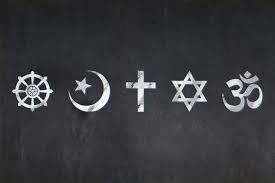
    What the theist will most likely struggle with here is my desire to bifurcate faith and religion (I’ll be honest, I wrote this blog more than partly to use word ‘bifurcate’…tick). Faith is a fundamental and indispensable part of religion. It is the engine that drives a belief system that a divine power:  unobservable, untestable and unmeasurable can still exact force and cause on a natural world. Faith (in its religious context) is the belief in something that we cannot see, hear, touch or taste  but that forces  control over our lives and every single atom on the planet. So why do I respect ‘faith’ when I don’t necessarily agree that such a thing exists? For me, the intrinsic part of a person’s faith is the belief in something greater than themselves which, practiced at its best, is something which is a force for good. Examples can be found in Art and Music, particularly religious music. I respect those individual persons whose belief in a higher ‘good’ (and it must be ‘good’ to be worthy of respect) can move them to create music and art that transcends, inspires and invigorates. Faith moves us beyond the limits of ourselves. 

    I want to maintain the word ‘faith’ as narrowly defined in its spiritual understanding. I recognise we can ‘have faith’ in events yet unfolded that we hope will be positive or ‘faith’ in other people’s best selves – but for the purpose of clarity and semantic truth, I am using ‘faith’ to mean belief in an unseen deity (or deities).  It’s a committed move on my account – because I must establish that ‘faith’ whilst differently perceived between persons, is an intrinsic element of being human – therefore, as we should respect human freedom, pursuit of happiness and our own and others physical fidelity ; we respect faith because it could be argued to be what makes us uniquely human. For the atheist or the phenomenologist – Faith is either illusory or a construct to make sense of a world out of our control and whose mechanical clicks and whirrs we are but witnesses too… but I wonder if the necessary presence of a capacity for faith, even faith that a mechanical universe can click at all – is power enough to make it worthy of respect? . Maybe that’s a topic for another blog. 

    To cleave ‘faith’ and ‘religion’ I am establishing that ‘faith’ is an intrinsic human quality that we all possess that allows us to doubt the limitations of our senses and believe in powers unseen. However, to categorize, rationalize and order this component of our humanity – humans turn to religion. Religion is the ordered and proselytized practice of the doctrine of scripture and its codes of conduct. It is the thing that takes the natural element of our ‘faith’ and utilitarianizes into ‘do such and such’ for a good outcome and ‘avoid such and such’ to negate a bad outcome. It is how humans have practiced their faith and has changed over the eons. From a panoply of Gods to the axial age of monotheism. From deities in your drinking water to deities in your dreams. And as prophets, seers and shamans have codified and sought to rationalize this unseen phenomenon so we are fraught with scriptural contradictions, contrary understandings and at worst, the appropriation of words of conduct twisted to make normal that which should be abominable. Such is the complexity and fallibility of religious teaching.

    The constant unchanging form – is the faith that sustains them. Religion needs faith, more than faith needs religion. 

    Conclusion

    If faith is a part of who we are and is what connects us as humans, then it is worthy of our respect. We should tolerate others’ views and practices (where doing so contravenes no civil or universal moral law) because in doing so we are ourselves lifted. However, never forget the essence which drives all of this – a capacity for faith. The essence which juices your self-belief when all things seem low, because maybe someone or something out there will provide for the best you can be. It’s what coaches your drive to be as good as you possibly can be – the faith that there could be a greater version of you existing beyond, though not impossibly beyond, your natural world. Let’s all respect that capacity for faith both within ourselves and others – and tolerate that joy and passion to be expressed by the clasping of hands, the removal of shoes, the bowing of heads, and the recitation of prayers.
  • An Incidental Experience – Something resembling a resolution

    In the third and final post on this stream of thought I will consider a more earthbound, strictly atheistic ‘law of nature’ perspective of human experiences. The argument is that on this view,  nothing could possibly be actually ‘transcendental’ in any objective sense of the word as to be ‘beyond our own limits’ is to suggest the existence of something beyond our own world to make that comparison with!  

    Therefore, something can be ‘adjectively’ transcendental to me, yes – but arguably not transcendental by any objective measure or as a noun.  

    It would appear that I have to give up hope of ascribing a truly ‘out of the ordinary; beyond the limits of human experience’ description of ‘transcendental’ to my moment of enlightenment, because for the hard-core existentialist (referred to as epiphenomenalist – but that’s the last time I use that term) it is only material bodies which really exist. We should instead call my experience what it apparently was: a series of chemical reactions which my subjective conscious mind – thanks to fifteen years hence of experience and training – can now label as adjectively ‘transcendental’ and not objectively so.  

    And the problem with this? Do I now have to commit to a mechanistic, materialistic, universe? And what do I mean by these terms? 

    Well, put simply, a mechanistic-materialistic perspective of the universe is one where all things are reducible to being part of a large-scale mechanism with all that populates it being material things only – those things which are made of matter and have form, existing in time and taking up space. All our conscious thoughts do not take place outside or separate to our brain…they are, in fact, all generated by our physical brain neurologically. It’s a place in which there could exist no ‘universals’ as there are no shared essences which bind us – only similarities. The theist will easily paint a bleak, cold-deep recesses of space ‘where no-one can hear you scream’ scenario for any who should seek something more prosaic. But actually, that’s not what troubles me within the context of my story. 

    What troubles me is that such a mechanistic view commits me to what’s called ‘determinism’. For a superb debate and explanation on determinism and freewill you can’t go wrong with the excellent ‘Philosophy Bites’ and in particular May 2012’s episode on Neurology & Free Will

    https://philosophybites.com

    If we are part of a series of universal moving parts playing out to a seemingly eternal ‘Rube-Goldberg-esque series of events then there was at some point a ‘first cause’. Don’t get the theist started – they’ll tell you who caused that ‘first cause’ and it wasn’t simply the mega out of-nothing explosion neither but for the atheist it was the Big Bang that set in motion all the things that happened from the hydrogen in-rush to the point, that evening in 2005 when, in a top bedroom in a terraced house in a Leeds estate; Classic FM played the first mandolin strum of ‘How Sweet the Moonlight’ that would inevitably lead me on my journey. To be a determinist is to essentially say ‘it would ever have been thus’. All events in my life, like all the events preceding my conception, and my parent’s conception and so on, would have led to a new girlfriend’s love of classical music – a radio switched on and internet research on ‘countertenors’ 

    I would suggest this makes ‘How Sweet the Moonlight’ incidental. It could have been any song that evening (though arguably, the Hard Determinist would say ‘no – it still would’ve always been ‘that song’) that would have driven me onto that new path in my life of self-discovery and growth. So does a purely existential universe view – devoid of objective perfections and divine interventions, concepts of free-will (debateable), immaterial souls and arguably a separate conscious mind make my experience ‘less transcendental’ because, quite frankly, there wasn’t really anything ‘special’ about it. 

    Now I need to make my stance on this matter. The time for explanations and ‘question-begging’ must come to an end.  

    In conclusion (finally)

    I can accept determinism; I can accept that I was always going to have that evening which would have led me on my journey – and I can accept a world without an interventionist God. But I can also feel sound that it was a transcendental moment because, as I began to argue previously, irrespective of what would have always been – the moment was clearly ‘transcendental’. No, I didn’t know it at the time but I would in fact go on to push ‘beyond the limits of my experience and knowledge’ – I would indeed transcend self. I concede to a secular use of the term I yield to an existentialist viewpoint and  it would appear I cannot satisfy my previous argument that ‘transcendental’ connotes ‘divine’ – but maybe in the future that could be a separate post. 

    a final thought…

    But for all of us, theist and atheist alike – it is possibly the outcome rather than the inspiration that should be the focus of wonder. There is a warm feeling, a satisfied scratch of the itch knowing that there are moments in our lives where we could be on the cusp of something greater than what we are now. And when we reflect on those transcendental moments…we can offer insights and encouragement to others whose lives may feel all too horizontal. After all, our encouragement and belief that their life’s journey could turn on a dime might be the intervention their God had planned for them… 

  • The ‘Transcendental’ Experience

    In my previous blog I talked about a single experience some fifteen years ago which would go on to promote tremendous personal, cultural and intellectual growth. It was from hearing Jocelyn Pook’s ‘How Sweet the Moonlight’ sung by the countertenor Andreas Scholl. I often reflect on that experience as being ‘transcendental’ but is this description problematic for the non-believer? My heart wishes to retain this moment in my life as ‘out of the ordinary’ but to do so, must I commit to what a theist might call ‘the hand of God’?

    Transcendent: exceeding usual limits; extending or lying beyond the limits of ordinary experience; (In Kantian philosophy): being beyond the limits of all possible experience and knowledge

    Merriem Webster Dictionary

    Part of my problem is that I don’t think it’s possible to use the word ‘transcendental’ without it’s other-worldly connotation. For the very existence of the term almost demands at the very least that something beyond the limits of ordinary experience could exist. There is an argument that terms such as ‘sacred’ and ‘transcendental’ can absolutely have secular meaning and that all we need is the ‘idea’ that such fantastical – natural law-breaking entities could exist. But if I commit to my 2005 experience as being truly transcendental – I get the benefit of believing that forces outside those of my own conscious mind can affect me directly.

    For the theist reading this, there is probably a slow sagacious nodding of the head. She is possibly reading this thinking ‘yes – this is what we Christians/Muslims/Jews/ or any faith that believes in an interventionist God have known since revelation. You can only truly have a transcendental experience by the will of an entity that is itself – transcendental. How is it possible for your own limited human mind, contained within three pounds of grey matter, to truly experience anything other than that which you can account for either by sight, taste, touch or sound. Your feelings back then in 2005 as Andreas Scholl’s voice captivated and inspired you was not simply a psychological reaction culminating from the physiognomy of chemical signals in your brain flooding within you a hormone induced feeling of transcendence – it was God, actually ‘lifting’ you to a higher place of knowing, albeit briefly, to set you on your path to greater enlightenment. You know that the experience was truly other-worldly as your subjective world as it was, to all intents and purposes, forever changed.

    Alright. Well…now I have a problem. I like this. I like this a lot. There is a tremendous amount of comfort in knowing that experiences that are transcendental could be evidence that a power, greater than that which I can imagine, are finding ways to help me grow and improve – and if it were possible to simply park the role of a celestial being in my life right there – then that would be useful. I love my God because She only gets involved to make sure I’m not missing any great opportunities to improve. Were it that simple. That rabbit hole entrance to faith (God as interventionist and interested in ‘me’) comes with a series of other commitments which, as I said in the previous blog, I simply cannot make. Commitments to doctrine, to ritual, to the paradoxes of Scripture and the fallible human hand making sense of the ineffable. I will absolutely concede that we are not limited to the Abrahamic faith’s interpretation of a divine being – there’s other ideas out there – but the natural world, understood by others and witnessed by me gives no objective proof that such a thing exists. There’s a reason why a belief in God is called a leap of faith.

    So I still have the ‘transcendental’ problem. I can’t (or won’t) cross that Rubicon to a belief in God. So before I give over to the a-theist view, can my experience be saved from a simply psychological one? Let’s be clear on what exactly was the ‘transcendental’ moment for me in 2005. At that moment of hearing ‘How Sweet the Moonlight’ I was ‘transfixed’ ‘mesmerised’ ‘transported’ – as I have been in many other experiences before and since. No doubt I was experiencing strong psychological affects all of which were very pleasant. Within those four minutes and fifteen seconds I was not lifted to an astral plane nor did I glimpse Nirvana. In actual fact – the incredibleness of that evening was only realised upon reflection. I would certainly not have described that evening as a ‘religious experience’.

    Ahhh! So is that the true nature of transcendence? It is not something one ‘feels’ rather something one ‘realises’. Transcendence only comes through context – through careful study of the whole story – not simply a tiny section of it. Maybe I can describe it as transcendental because it is only some years after the event I can fully appreciate the significance. Now I have context – I can clearly state that was a moment beyond the ordinary. I can only know I was beyond the limits of my own experiences because I had no idea what was to come next. This has potential for allowing transcendental to retain the meaning above but not tie me to the divine.

    But yet it would appear then that I must concede that the experience itself was purely psychological and it’s lasting affects assigned to more earthly and ultimately human reasoning – so why do I feel a little disappointed? And why should I feel that psychological explanations are simply a ‘silver medal’?

    It seems reasonable to ascribe ‘transcendental’ to the effects of the experience later on in my life, as I see it as part of a longer journey – but why did it happen then? Was that moment simply incidental?

    In my last blog on this train of thought I will explore what it would mean to say it was simply incidental that “How Sweet the Moonlight’ would come to be such a significant moment. There may be some problems linked to free will and causality to consider – but as I prepare my thoughts, I wonder if the itch that remains present is whether my conscious mind could ever be enough to explain how some experiences can be so…beyond my limits.