Tag: social work

  • Fathers? Absent. Teachers? Present.

    Fathers? Absent. Teachers? Present.

    The problem with holidays is one has time to scheme. The day-to-day pressures of working and upholding a work persona mean that when one’s time is one’s own and the inbox is ignored and the work persona shelved: new, interesting, ambitious and creative projects come to the fore. Currently, the ambitious and creative project hamster which spins the wheel in the back of my head and occasionally and loudly nibbles on toilet roll is what I would do for a PhD. More often than not, the rustlings and nibbling’s of project hamster are drowned out by the bellows of students and vicissitudes of everyday life. Like I say, that’s the problem with holidays.
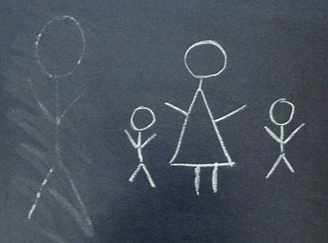
    Men are a problem. I would confidently claim that in a substantial amount of a child protection social worker’s case load the bulk of the load is caused by a man: a man who is absent causes problems; a man who is present causes problems. They’re just problematical. Problematic men in a child’s life within a child protection context would be fairly obvious – risk of abuse. However, their absence from a child’s life can place significant strain on the normative parenting workload of a single parent. Furthermore, the lack of a good role model can also be detrimental to a child’s sense of identity and esteem. However, not all male parenting figure’s absences are linked to child protection. Oftentimes, the nature of a significant male role model’s absence in a child’s life is simply due to expectations and pressures of work, and within the context of international schools – the earning divide. This is especially felt in countries where the wife (though not exclusively) or ‘accompanying spouse’ can’t get a work visa which places the ‘breadwinner’ burden firmly on the male side. The reality for a lot of hard-working and loving fathers is that their ‘problematic’ absence is not due to maleficence, but simply work commitment. Another significant variable, especially for expat families, is the lack of a family support network. All put simply, in my experience in international schools, dads are away a lot. I know this because the children tell me. And they tell me that whilst they understand why their dads are away…they miss them.

    Parenting can be problematic. And in child protection social work it can become unsafe and concerning. When child protection social workers are faced with overwhelming evidence that a child is at risk of significant harm, they can use legal powers or ‘Care Orders’ to remove that child from the home (often temporarily, sometimes permanently). During that period of separation and before any final court orders around adoption happen, the biological parents retain their legal status of ‘parent’ and all the responsibilities therein, however the local authority is given a new epithet: Corporate Parent. Now, I like the phrase ‘corporate parent’. That said, I understand the grind between something as innately caring and purposeful as ‘parent’ and something as myopic, calculative and materialistic as ‘corporate’. However, parenting can be a hot boiling mix of values, ethics and psychology that could benefit from the cubed iced drops of policy, procedure and measurable outcomes. What I liked most about the phrase ‘corporate parent’ during my time as a social worker is it separated me from the role. When I was working with a child, I could exhibit the unconditional regard for safety and the intuitive show of compassion and care linked inextricably with good parenting but had that corporate parent embossed tempered glass panel between us that allowed me to make rationale and evidenced based decisions for what was best – unfettered by any ‘loving obligation’.

    Well, that was theory. In practice it was incredibly hard – especially when the ‘Body Corporate Parent’ (senior leadership) insisted on decisions that either made no sense or clearly didn’t know the child. However, I digress.
    Can I say, the hamster in my head is feeling the love right now? I am metaphorically cleaning out the cage, refilling the water and putting a few treats in the bowl here. To be honest, it was beginning to smell a little bit.

    The PhD idea? I am essentially talking about non-dangerous absent fathers and the role of the corporate parent – in this case ‘teacher’ and more specifically: ‘male primary school teacher’. Where am I going with this within an international school context and what does this have to do with a PhD? It would be my view that male primary school teachers have a corporate parenting role to play in their student’s lives within certain specific contexts. I would almost go as far as an ‘obligation’ to do so (if I was feeling more controversial) And whilst there are professional, ethical, and sociological issues with this claim (and that I would be made to refute) ultimately, teachers do share the parenting load; they do have a legal duty of care anyways and, because of the problem of men – male teachers should be prepared to pick up the extra heavy lifting in certain contexts as a corporate parent.

    Cage is clean, hamster is happy. I’ve made a lot of claims here about fathers and family demographics in an international school setting – but I reckon with a good academic library, and some of my own qualitative research, I could substantively prove this to be the case. I’ll be arguing some pretty interesting points from education philosophy, sociology and ethics but again, I would probably enjoy that! But, what do you think? I would welcome the views of any readers of this piece on the statement:

    Male Primary School teachers have a corporate parenting role to play within the lives of children with absent fathers.

  • Our Identities and Our Responsibilites.

    In this month’s blog, I will suggest that when we think of our own identity, it can be misleading to believe that it is the same thing as us being independent, individual persons. In fact, our identity is comprised of many components and by being part of many social and cultural groups. I am Dillon Wolfe, an individual person. There are no other Dillon Wolfe’s, like me, existing as I do now in this time and in this place. However, in terms of my identity, I’m not the only Dillon Wolfe ‘man’ or Dillon Wolfe ‘father’ or Dillon Wolfe ‘teacher’. ‘Man, Father, Teacher’: these are all groups or communities the membership of which is not only how I identify myself, but how others identify me. 

    What do I mean by identity? I mean that through recognising or idenitfying which groups I belong to, others have a clearer idea as to my obligations, my passions, my skills, my ideologies etc. In other words, ‘who’ I am can be reasonably, if not wholly accurately, inferred from my group memberships. If this has traction, then how responsible are we when others within our community act reprehensibly? Are we obligated to speak out against terrible actions committed by community members because it harms our own identity as good consistent individual persons? Or does our own individuality preclude this, and instead permit us distance from how our communities act? I will argue that we are our communities and that, as a member of the community of men, I am obligated to speak out against the impermissible and intolerable behavior of that community. For to be silent, or worse to be supportive of such behavior not only harms me personally, but stunts the flourishing of that community.

    https://www.independent.co.uk/news/uk/crime/sarah-everard-missing-met-police-b1814958.html

    The shocking murder of Sarah Everard, at the beginning of March this year, stunned the UK. What transpired throughout the rest of the month prompted a global reaction, mostly an outpouring of not only sympathy for Sarah and her family, but empathy for the strata of harassment women face from men on an all too common basis. This harassment ranges from sexually vulgar language in the street, to women armed with house keys when walking home alone at night and of course to the horrific events that led to Sarah’s murder. As the month has progressed and the case developed, as did the deeper the discussion into the problem of ‘men’.

    I will never forget one of the first journal articles I read as a Social Work undergraduate was around the ‘problem of men’. Its theme was how, if present at the home, a man can be a risk to his wife/partner and their children in terms of domestic abuse and/or child abuse and yet when absent – he is problematic by providing no fiscal support for dependents and the long-term emotional damage faced by children with absent fathers. I remember being stunned by the article and, whilst recognizing the academic context within which it was written, I was disconcerted by the bleak picture of men being painted – a picture made real by my own observational experiences in social work practice.

    Events such as Sarah’s murder cause shockwaves. Not just of shock and grief, but also how we function as a society. When a social bomb such as this explodes – the shrapnel flies into areas across our cultural field. One such piece which lodged in the craw of newspaper editors across the world was the notion that it is ‘men’ who must shoulder some of the blame and that it is men who are the problem. When Baroness Jones, a Green Party peer, suggested men should have a 6pm curfew it was meant as a retort to the Met Police’s own advice that women should avoid going out at night on their own – a tacit admission by them that sexual harassment against women is, like Covid, ultimately incurable and at best, chronic. What followed for Baroness Jones was another predicable social media (male) malaise – the incensed misogynist: full of threats of violence and threats of death. However, a line that came through often and to all intents and purposes in the defence of men was the bumper sticker: ‘not all men are bad’. Whilst the truth of the statement ‘not all men are bad’ is debatable (define ‘badness’ for example) let’s narrow it, and understand it in the context of the sexual harassment narrative women face daily and ask: Don’t I as a man and all the fellow men I know have an obligation to act not only to protect but also to better the community into which we belong?

    Integral to my argument this month about the phrase’ not all men are bad’ and its drinking partner ‘a couple of bad apples’ is that they attempt to distance the speaker from a community to which they belong and a community they are obligated to act upon to correct mistakes. For whilst we may think of our identity to be a monolithic – we are in truth identified by the multiple groups or communities to which we belong. Therefore, if one of our communities fails, and we as an individual agent or person fail to act, we may not be representing the very best of that group and could be tethered to the individual or their acts which brought the group into disrepute.

    Let’s get some clarity by asking an obvious and ultimately daft question – am I, as a man, to blame for Sarah’s murder?

    Of course, I am not to blame for Sarah’s murder or for any other crimes committed by other men against women. However, if I don’t accept the evidence that there is an issue with men’s behaviour within the context of the treatment of women and seek to move the needle – I am not fulfilling my obligation to be my best self within that community and uphold the goodness of that community’s nature – particular as a father of boys. This could cause a situation whereby I am tacitly condoning such awful behaviours with my silence.

    It does appear that there are some folks who either find it difficult , or fail to see the issue with, understanding that whilst they are indeed an individual ‘person’, that ‘individuality’ and ‘identity’ are not the same. Our identity comes from being part of a ‘community of persons’. My identity is defined from being part of the community of men; community of Everton football supporters; community of teachers, of social workers, of fathers etc. When a Social Worker was on the front page of a tabloid having failed to protect – we as a community of social workers all felt the sting, shame and regret and all shared the burden in seeking improvement and bettering our practice. When my football team fails to win a game or its players act in impermissible ways – I don’t stop supporting them, or claim that my identity as an Evertonian is only when it makes me feel good. People would question my commitment to a group and also the nature of my own personality if I flip-flopped between my communities when something was wrong. 

    Our identity is not separate to the communities which define it, they ARE our identity. Clearly there’s no single definition of what a ‘man’ is – but being part of that ‘community of men’, I strongly believe, is about having a consensus on some of the critical defining points of what a man is including, and this one’s up there with ‘penises’, not abusing women.  And yes, unfortunately, our communities fail us as well as lift us up. It’s a fluid relationship – but it is still a relationship that requires work and honesty and for me, my membership to the community of men is life-long.  I am identified as man not because I held a meeting and told everyone – but because of the myriad of pixels that comprise the physiological, psychological, sociological and philosophical identity of ‘man-ness’. Those numerous-pixel points when seen as a whole, bring in to focus a picture of ‘manhood’ that is significant to my identity. I would argue that whilst others in my community can debate which of the pixels has the most significance and which ones are necessary and which contingent – there is a broad consensus as to what constitutes a man.  Therefore, to observe the actions of the ‘community of men’ that are reprehensible and NOT condemn it, and NOT call it out and NOT support the victims of such actions is impermissible because we ARE our communities. 

    Conclusion

    When the community of men fail, which is depressingly often, I am attached to that failure. Our obligation to act when one of our communities’ fail is because if we don’t, then it is our nature as good moral persons that suffers. I suffer when my community fails and vice-versa. Clearly there are some communities we can walk away from, but there are also some that we must change when we something rotten. I would therefore question the membership of any one of our community of men who hid behind the illusion of their independence from our group.  

    atheists Belonging children education ethics Expats free speech Freewill gender gender neutral God identity inspirer's International language learning men Neo-Pronouns parenting parenting advice parents Person Philosophy Philsosophy politics Pronouns reflection relationships Religion self-help self-regulate self-soothe social social learning social media social work sociology teachers teaching theology Third Culture Kids transcendental twitter vaccinations work