
In this month’s blog, I will argue against naming school-aged child learners as ‘pupils’. I will suggest that calling them ‘pupils’ is at best simply naming a child who goes to school and at worst it is idealistic and out of touch with modern pedagogy – promoting the outmoded product of a dependent taught child. I will then offer the argument that to promote the image of a school child who doesn’t simply attend school for instruction but as an active learner who is studious by nature – then only the term ‘student’ will suffice.
My wife and I are both teachers. Now in her twelfth year, Mrs. Wolfe is significantly more experienced than I having taught in one Europe’s largest secondary schools in West Yorkshire followed by seven years teaching internationally in Asia and North America. We have worked in schools that have called child learners students and schools which call them pupils. My wife really hates the term ‘pupil’. In fact, this debate was her idea. I told her I would consider it philosophically and she could do the actual research. When she is typing reports, I can hear the extra punch saved only for the sequence P-U-P-I-L. But why is this a problem? Does it matter? And if it does matter – is there a reason why one term should be preferred over the other?
A good place to start is with a definition:
Pupil: a child or young person in school or in the charge of a tutor or instructor : Originating from the 16thcentury Middle English pupille (minor ward), from Anglo-French, from Latin pupillus (male ward) from the diminutive of pupus (boy) and pupilla (female ward), from diminutive of pupa (girl).
Student: One who attends school; one who studies; an attentive or systematic observer. Originating in the 16thCentury Middle English, from Latin student-, studens, from present participle of studēre to study.
Merriem webster – online dictionary
We can see some similarities and some differences that will go straight to the heart of the matter and also explain why Mrs. Wolfe’s nervous tick is so pronounced during report writing season.
In terms of etymology, both terms originate from some form of Latin (no surprises there) but each sketch a different picture about the nature of the child learner. If we were to simply rely on the definition of each term and its etymology – then ‘pupil’ is a child who is in ‘the charge of another’. Deriving from a word meaning ‘ward’, the term ‘pupil’ (like Batman’s sidekick) is a young person who is watched over by someone other than their parent. Therefore, the nature of a pupil is one who is dependent upon instruction. A student on the other hand is one who ‘studies’ and that verb study is intrinsic to its definition because it casts the mould of a learner – with a degree of independence. A learner for whom studying and learning are within their nature.
With our terms defined and to some extent explained, why is calling a child learner a ‘pupil’ an issue? The problem lies in an apparent contradiction. Of the schools I have worked in and the current pedagogy as it is – our learning institutions should be promoting independent critical thinkers, not children who are simply in the instructional care of their teachers. Furthermore, to stick with pupil because it best categorizes school-aged children is to suggest that it is only when they leave school that independent thinking and study should start. It is clear to me that etymologically speaking and given the challenges of the twenty first century that we need more students – not pupils.
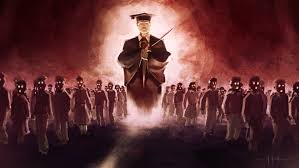
Let’s speak intuitively before we get too analytical. When I think of a ‘pupil’ I think of blazers and straw hats; white socks pulled up above the knees and lichen on granite. Elsewhere in my mind are wood paneled classrooms, desks in a row (socially distanced, of course), ink wells, stern mustached school masters their faces contorted in a snarl; children trudging into a meat grinder…giant hammers marching past…hang on…that’s the video to Pink Floyd’s ‘Another Brick in The Wall’. However, that’s what pupil connotes. Its essence is ‘old-fashioned’, a term for a simpler time. The appeal of pupil is romantic and idealistic – it can offer a vision of well-disciplined rows of obedient children being processed through a system, dependent and deferent to their school teachers and its rules and policies. What is wrong with that? What could possibly be the problem with quiet, obedient and dutiful school children? Quite frankly, it’s fantastical! A school that promotes quiet, deferent dependency…show me the school brochure where that’s the selling point and the first round is on me. A student however cuts across ages, feels dynamic and has ownership. A student is still someone who receives instruction – but there’s a self-study, independent thought. Put simply:
A pupil is taught; a student, learns.
If you are already swayed by my argument to emotion then read no further! We all agree and everyone’s home in time for tea. If, however, you want some meat on the bones…fine…but you asked for it:
- School is a place for learners.
- A learner is the same as a person who studies.
- A person who studies is a student.
- Therefore, we should refer to school learners as ‘students’.
For premise (1) I have made what I think is a pretty strong claim. Learning is a necessary essence of school for without ‘learning’ taking place, it’s difficult to define what the purpose of having children at a school truly is. Furthermore, isn’t everyone in a school a ‘learner’? The term does not necessarily denote a minor. As a teacher we never stop learning. It also helps me considerably because ‘learning’ is at the heart of the argument.
For premise (2) I have to make the claim that a ‘learner’ is the same as someone who studies. Again, I feel confident that they are one and the same. For someone to be described as ‘learning’ then a period of study, no matter how long or short, must take place. I would agree that there are things that could be learnt intuitively with a minimum of study – but is it at all possible to learn anything without actively studying?
For (3) to hold, we have to be firm with our dictionary definition. I would argue that one objective source of information for the purpose of a non-academic blog should be enough. But let’s be fair, there is some traction to the argument that there may be some ‘pond’ differences here. Some may argue that ‘student’ is more an American term with pupil being more British. Ostensibly, they are the same thing. Furthermore, it could be argued that ‘pupil’ fits more for school aged children whilst ‘student’ for college and undergraduate learners. To that I would argue that we need a term that best defines ‘learners’ – not simply souls enrolled in a school. The noun must be ‘active’ not ‘passive’ to play slightly with the terms. The term student is by definition intrinsic to study – study is intrinsic to learning – consequently; student most aptly defines a studious learner. Therefore, I would argue, that if a school places learning at the heart of what it does and places at the top of its lists of objectives that at various points during their school career a child will evidence self-study and critical thinking – they must call them ‘students’.
I couldn’t make the argument as succinctly for ‘pupil’ for not only is it difficult to prove etymologically – it doesn’t do enough to promote an active learner.

Conclusion:
It may be that my argument could flop into one about values as much as it is about definition and rationale and if so, fine, and I am happy to park it there. My wife and I talk often about our values as teachers being centered around the learners and their learning. We need a term that encapsulates that belief. I want the children I meet daily to not only be students of a subject, but students of the world. No-one says ‘pupils of the world’ because of the inference of dependency and of inexperience. Let’s consign this term to where it belongs – attached to disturbing music videos, hilarious Monty Python sketches and the quintessential English romanticism of a bygone era.


 StoatAubergine
Leave a reply to marie Cancel reply